Design notes
How the exocortex is built and why: the boards and their one pin, the hub, the cameras, the shell and its headband, the beanie and the soft pin. What the contacts would record, simulated: the simulation.
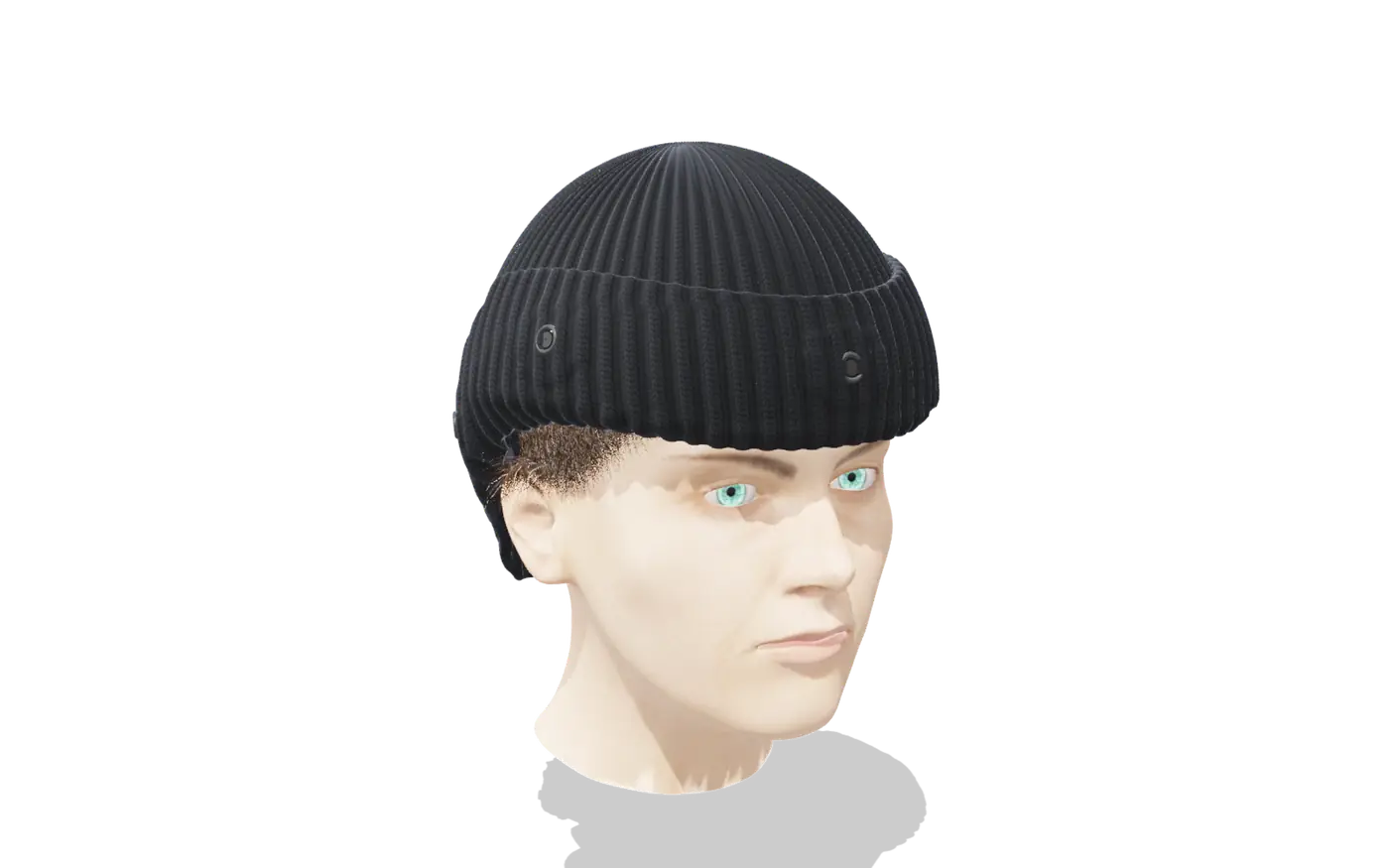
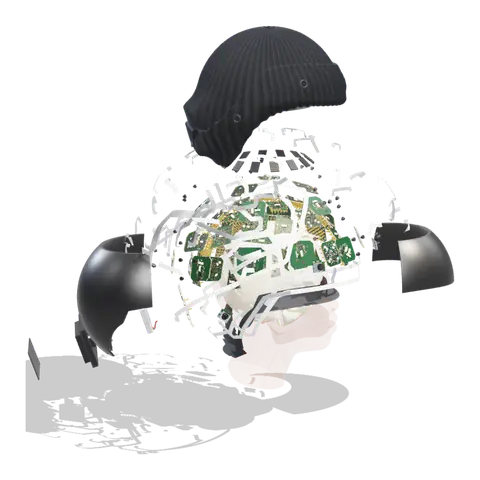
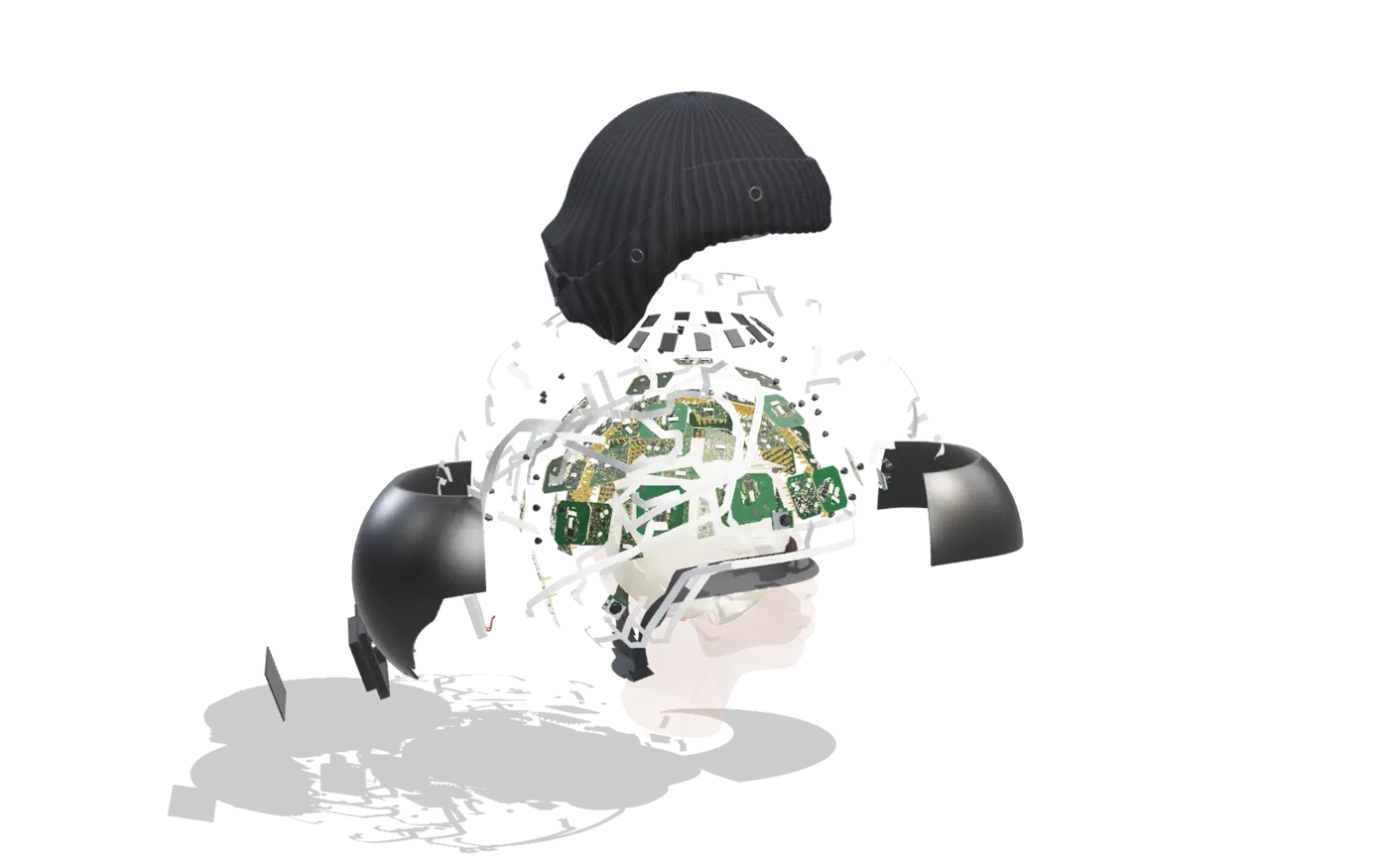
The designAn EEG helmet you can build: 66 flat circuit boards in rings round the head like the panels of a cap, carrying 1,118 gold-plated pogo pins that press through the hair onto the scalp.
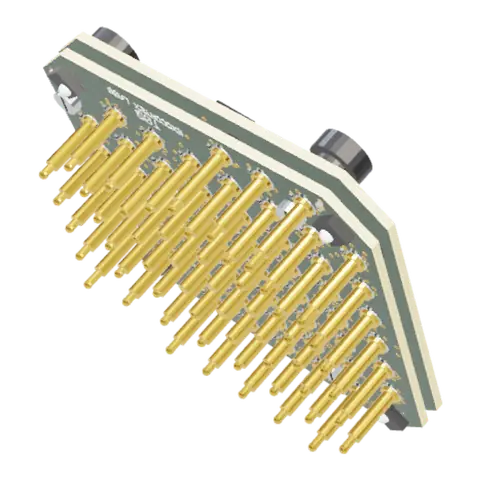
Contact boards and pins66 flat tiles cover the scalp with 1,118 contacts, and they are only 9 different PCBs: one trapezoid per ring for rings 1-3 and four shapes for the top.
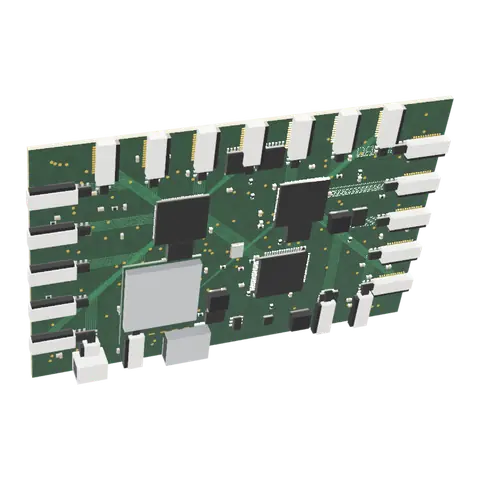
HubOne board at the back of the helmet: it feeds the 66 tiles in 16 daisy chains over the 12-pin FPC, powers, syncs and controls the 5 cameras over the same FPC and takes in their video, and links the helmet to a host.
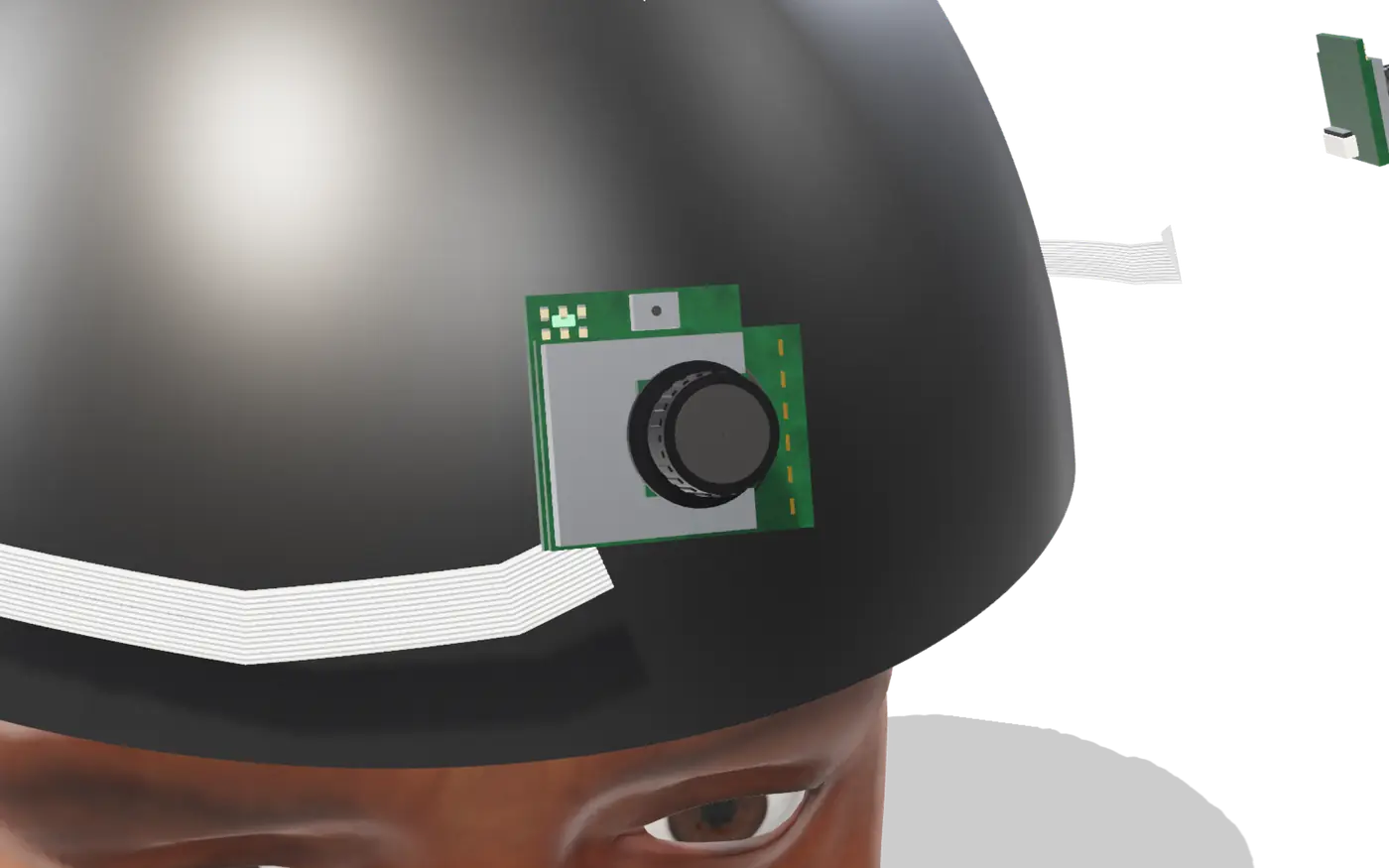
CamerasFive identical boards sit in the beanie's folded cuff: three across the front and two on the slanted back rim.
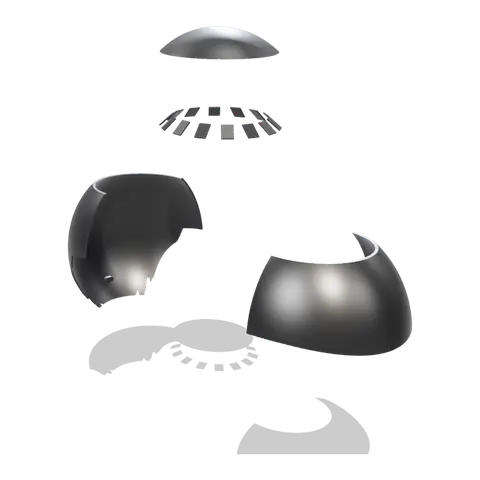
ShellThe PETG shell carries the 66 tiles, the hub, the battery and the five cameras.
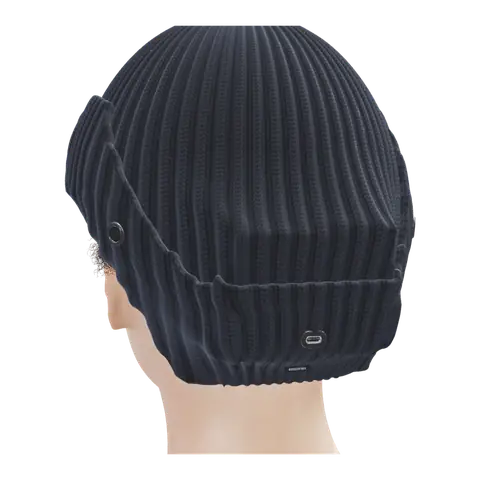
Beanie and chargingAn off-the-shelf acrylic knit beanie with a turned-up cuff goes over the shell: the Oddjob Big Beanie in XXL, a hat for big heads, 64 cm around as made.
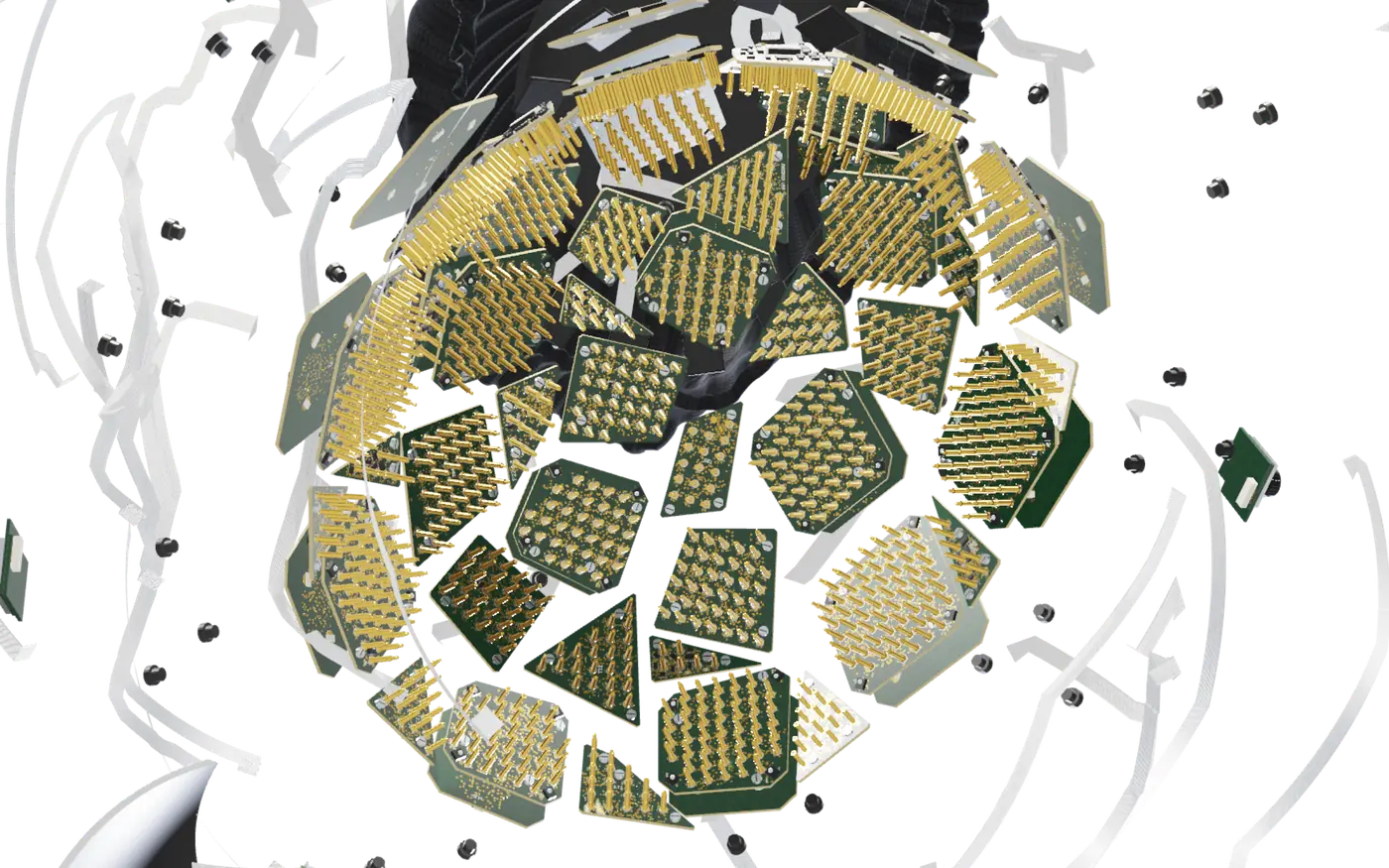
The soft pinToday's pin, the Kinghelm KH-205580-DZ, gives 70 g at its full 2 mm stroke and is linear from zero.
Ordering oneEverything to buy for one exocortex, from whom, and every option on every order form: $2,142.76 all in.